pi-durable-local
Public repo · in daily use
A small software factory: durable agent sessions take work from idea to merged PR in a sandbox, under budgets and merge gates.
- Node
- SQLite
- Agents
Frontend and accessibility engineer
I run a fleet of AI agents that build and ship my projects, end to end.
Nine years of frontend and accessibility work, now pointed at pi-durable-local, a small software factory where durable agent sessions take work from idea to merged PR under budgets and merge gates.
Projects I am building. Each card opens the live version; some also link to source code.
Public repo · in daily use
A small software factory: durable agent sessions take work from idea to merged PR in a sandbox, under budgets and merge gates.
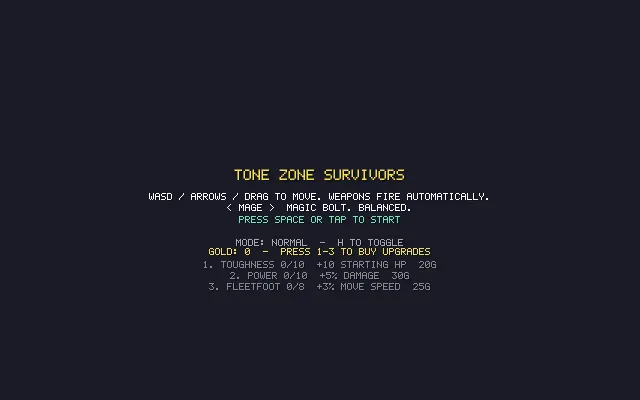
Playable in browser
A Vampire Survivors-like in plain HTML5 canvas with no build step; weapons fire automatically and you pick upgrades on level-up.
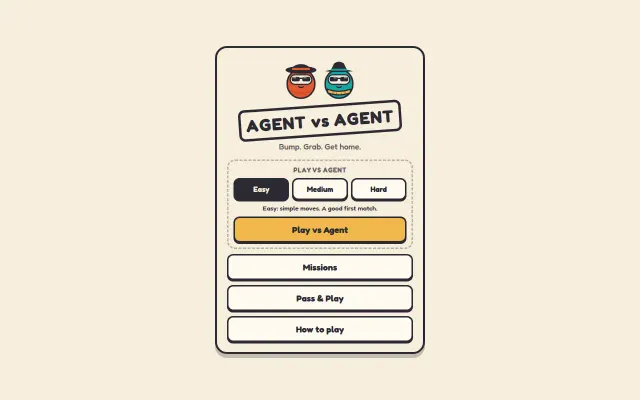
Playable in browser
A bump-and-run spy board game for phone and desktop on a 6×6 board, with 21 missions each proven solvable by tests.
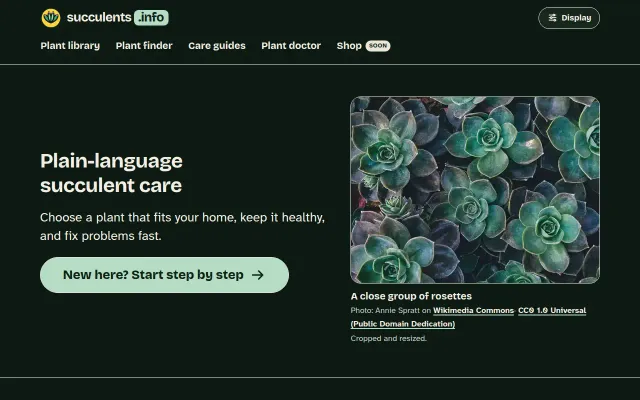
Live
Plain-language succulent care guides, a plant library, and a symptom-led plant doctor.
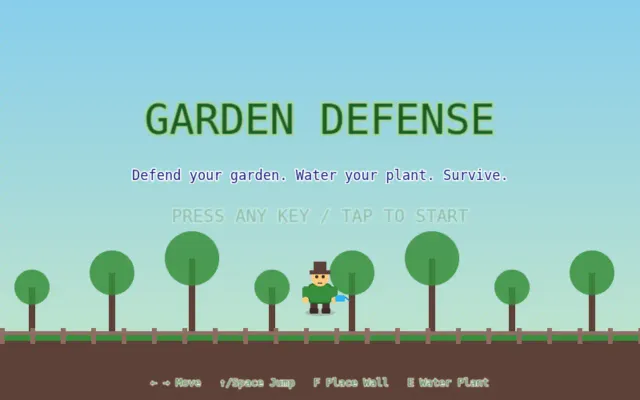
In development
A browser game in development, built with Phaser.
The projects above come out of pi-durable-local. One daemon owns the state; everything else goes through it. This is the path a change takes.
Goal
Tony and Claude Code sessions set goals and answer escalations. Cheap Sonnet and Haiku sessions are the workforce.
Session
Long-running agent conversations in a bubblewrap sandbox with no credentials. They survive restarts and resume from the last committed step.
Loop
A session wakes on an interval within a dollar budget and an iteration cap. A gate decides in code whether a tick is worth running.
Gates
The daemon opens PRs from a template. A deterministic state machine, pr_tick, picks the one next action.
Review
A separate model reads the diff for the exact head commit. Risky or one-way changes park for a human.
Merge
Low and medium risk PRs that pass every gate merge, pinned to the checked commit.
Agents never hold GitHub credentials, and an audit log records every decision.Read the case study.
Nine years of accessibility work. This site checks AA colour contrast in a test, honours reduced motion and forced colours, and passes an axe-core scan in light and dark.
A static Astro site served from Cloudflare, with optimised WebP screenshots, a tiny amount of JavaScript and zero third-party requests under a self-only CSP.
One accent colour, a token-based type and spacing scale, and components that compose. Design decisions live in code and are covered by tests.
Want to talk about frontend, accessibility or agent tooling? Email is best.